Jainism at Pragya International School: Nurturing Minds, Shaping Values


Jainism at Pragya International School: Nurturing Minds, Shaping Values

At Pragya International School, education goes beyond academics—it's about molding character, encouraging spiritual growth, and fostering global citizenship. One of our unique strengths is the integration of the timeless principles of Jainism at Pragya International School into everyday schooling. Jain philosophy guides not only our curriculum but also shapes the ethos and culture across the campus.

 What is Jainism?

Jainism, one of the oldest religions in India, teaches ahimsa (non-violence), satya (truth), aparigraha (non-possessiveness), and anekantavada (respect for different viewpoints). Jain education nurtures self-discipline, compassion, and a peaceful lifestyle—ideals we embed in every student's experience at our school.

Jainism is not just a religion; it is a way of life that promotes harmony with all living beings and encourages ethical living.

 Jain Values in School Life

 At Pragya International School, Jain values are woven into the daily life of students, teachers, and the entire school community.

 Pure Vegetarian Campus

All food served at Pragya International School is vegetarian, supporting Jain dietary principles of kindness towards all living beings. Our canteen offers nutritious, wholesome meals that align with Jain values of compassion and non-violence.

 Non-Violence and Compassion

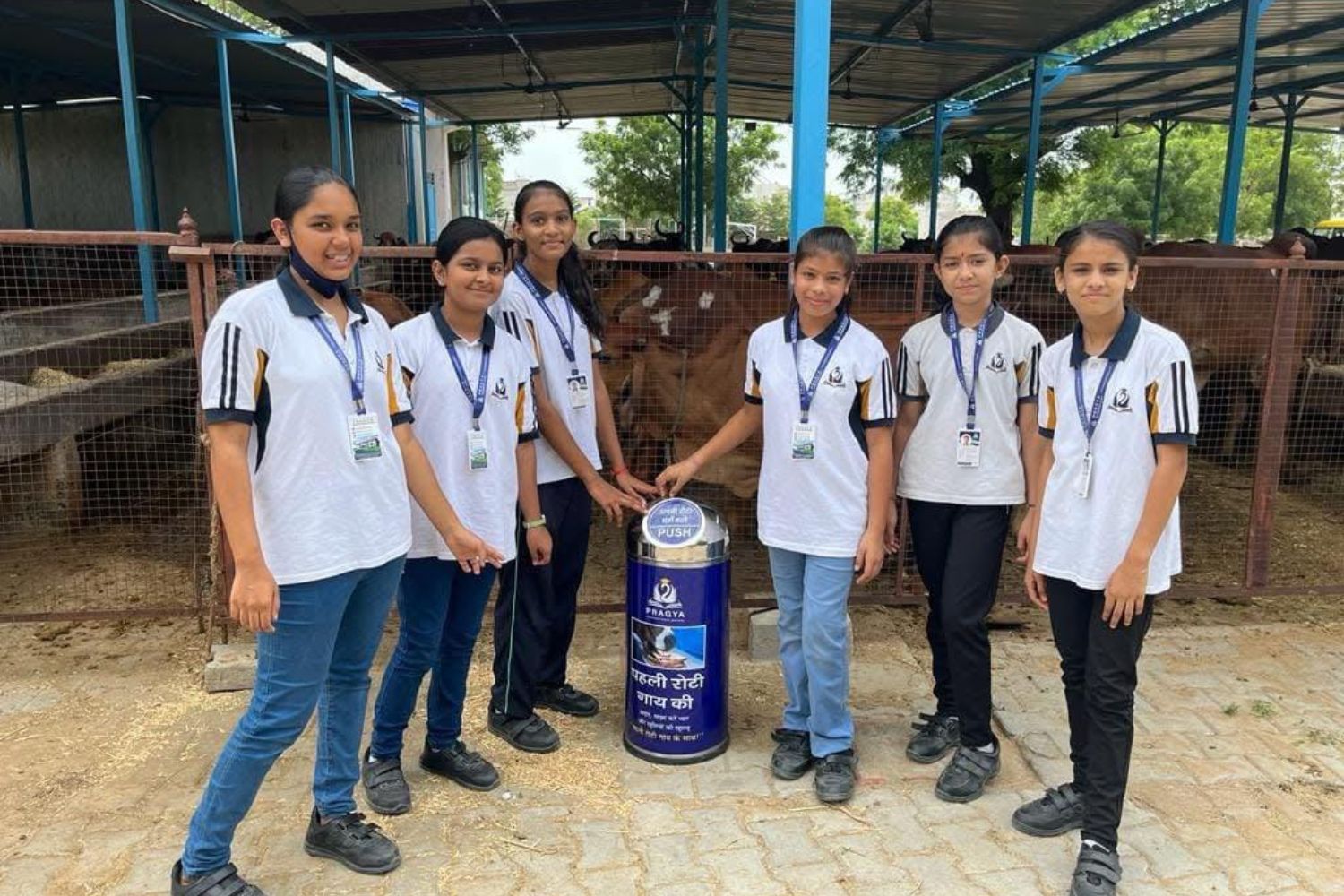
From our strict tobacco-free, violence-free campus to daily acts of kindness, students practice Jain principles in every aspect of school life. We teach children to respect all forms of life and to resolve conflicts peacefully.

 Festivals and Rituals

 Major Jain festivals—Paryushan, Mahavir Jayanti, Samvatsari—are celebrated with devotion, discourses, and forgiveness activities. These celebrations help students connect with their cultural roots and understand the importance of spiritual practices.

 Jainism in Curriculum and Character Building

Our Jain curriculum is designed to instill Jain philosophy from the foundational years. Students explore Jain stories, scriptures, Sanskrit and Prakrit basics, and participate in guest sessions conducted by Jain monks and scholars.

 What Students Learn

- Dedicated classes discuss Nav Tatva, leshyas (mental colors), moral stories, and chanting of Jain mantras 

- Students study the lives of Tirthankaras and their teachings 

- Sanskrit and Prakrit language basics for understanding sacred texts 

- Meditation and mindfulness practices rooted in Jain traditions 

 House System Based on Jain Ideals

 Our House System mirrors Jain ideals:

- Arihant (Self-Conquest) 

- Siddha (Liberation) 

- Acharya (Spiritual Leadership) 

- Dhamma (Righteous Living) 

 This system encourages healthy competition while reinforcing spiritual values.

 Experiential and Spiritual Environment

 We promote values of simplicity, eco-conscious living, and high thinking. Meditation corners and silence areas encourage mindfulness and self-reflection throughout the campus.

 The Guru Panna Dhyan Sadhna Kendra provides a serene setting for spiritual practices where students can meditate, reflect, and connect with their inner selves.

 Jainism-Inspired Activities

 Community Service

Drawing from Jain humanitarian principles, students participate in outreach programs, awareness campaigns, and environmental activities. They learn the importance of service to society and caring for the planet.

 Workshops and Camps

- Sanskrit camps to enhance cultural literacy 

- Value-education workshops to boost self-awareness 

- Yoga and meditation sessions for physical and mental well-being 

- Environmental conservation activities aligned with Jain respect for nature 

Why Jainism Matters in Modern Education

Jainism at Pragya International School builds a foundation of ethical thinking, social responsibility, and harmony in diversity—the most important skills for 21st-century students.

 In a world facing challenges of violence, environmental degradation, and social discord, Jain principles offer timeless wisdom. By living Jain values every day, our learners become kind, confident, and conscious global citizens who can make positive contributions to society.

 Key Benefits for Students 

- Moral clarity: Understanding right from wrong through ancient wisdom 

- Emotional balance: Meditation and mindfulness practices reduce stress 

- Environmental awareness: Respect for all life forms promotes sustainability 

- Global perspective: Learning to appreciate diverse viewpoints 

- Strong character: Building integrity, honesty, and compassion 

 Living Jainism at Pragya International School

Living and learning Jainism at Pragya International School means cultivating intellect, compassion, and character. We prepare every student to lead with wisdom and empathy in an increasingly complex world.

Our approach ensures that children don't just learn about Jain values—they live them daily through their interactions, choices, and contributions to the school community and beyond.

 Want your child to experience value-based education rooted in the timeless wisdom of Jainism? Contact Pragya International School today to learn more about our admission process and unique educational approach!


Written by
Dr. Naval Singh Jain
Director, Pragya Group of Institutions
Values • Vision • Innovation

x

Comments

Post a Comment

Popular posts from this blog

The Neerja Modi School Case — A Wake-Up Call for Every School Principal

The Neerja Modi School Case — A Wake-Up Call for Every School Principal Sometimes a single incident shakes the conscience of an entire community. The recent tragedy at Neerja Modi School in Jaipur — where a 9-year-old girl lost her life after months of bullying and repeated cries for help — is one such moment. Yes, investigations will continue. Yes, systems will be questioned. But beyond the reports and headlines lies a deeper question for every school leader: Are our children truly safe — not just physically, but emotionally and psychologically? This case is not about one school. It is a mirror held before every principal, every management board, and every educator. A Child Asked for Help — and the System Failed Her According to the inquiry, the little girl approached her teacher five times in her final hour, seeking help. She had been facing bullying for more than a year. Her small voice was ignored, misunderstood, or minimized — and the consequences were irreversible. Imagine h...

क्लास 11-12 के साथ CA और CMA की तैयारी: आसान गाइड

क्या आप क्लास 11 या 12 में हैं और CA या CMA बनना चाहते हैं? यह बहुत अच्छा प्लान है! CA मतलब चार्टर्ड अकाउंटेंट और CMA मतलब कॉस्ट मैनेजमेंट अकाउंटेंट। ये दोनों कोर्स बहुत अच्छी नौकरी देते हैं। CA को शुरू में 7 से 10 लाख रुपये सालाना मिलते हैं। CMA फैक्ट्री या कंपनी में कॉस्ट कंट्रोल का काम करते हैं । स्कूल के साथ ये तैयारी करना आसान है क्योंकि अकाउंट्स, इकोनॉमिक्स और बिजनेस स्टडीज जैसे सब्जेक्ट दोनों में कॉमन हैं। जल्दी शुरू करने से बोर्ड एग्जाम भी अच्छे होते हैं ।​ CA और CMA फाउंडेशन क्या है? CA फाउंडेशन में 4 पेपर होते हैं: अकाउंटिंग, बिजनेस लॉ, मैथ्स-लॉजिक-स्टैटिस्टिक्स, और इकोनॉमिक्स। हर पेपर 100 नंबर का। पास करने के लिए हर में 40% और कुल 50% चाहिए। ये एग्जाम साल में दो बार मई और नवंबर में होते हैं । CMA भी वैसा ही है लेकिन कॉस्ट अकाउंटिंग पर ज्यादा फोकस। क्लास 11-12 का 60-70% सिलेबस इनसे मैच करता है । ICAI और ICMAI की किताबें पढ़ो।​ क्यों क्लास 11 से शुरू करें? क्लास 11 से 18-24 महीने मिल जाते हैं। प्रेशर कम होता है। बोर्ड में अच्छे मार्क्स आते हैं। अलग कोचिंग की जरूरत नहीं, पैसे औ...